

A Fractured West
Europe Looks Lost, Washington Looks Tired, Britain Looks Politcally Frozen

Three Wars: Russia, Iran and Mali Are Reshaping the World
with Special Guest Stanislav Krapivnik
The world is no longer watching two wars unfold simultaneously. It is watching three. While headlines ricochet between Iranian missile strikes and grinding battles in eastern Ukraine, a quieter conflict stretching across the Sahel is rapidly becoming the third front in a widening geopolitical fracture. Mali and Niger have emerged as battlegrounds where Russian-backed African Corps units, former Wagner personnel, local militaries, separatists, jihadist groups, and foreign intelligence interests collide in a murky war few Western audiences follow closely. Russian military personnel now operate openly alongside Malian forces, backed by heavier equipment and increasingly integrated logistics networks. Burkina Faso has also entered the equation, turning what once looked like scattered insurgencies into a regionalized security bloc aligned against Western influence. The battlefield map keeps expanding even as political leaders insist escalation is under control.
The contrast between the wars themselves could hardly be sharper. The US-Iran confrontation has become a spectacle of abrupt reversals, contradictory messaging, missile barrages, and escalating rhetoric without visible strategic resolution. Massive expenditures of precision munitions and air-defense systems have reportedly burned through critical stockpiles while producing few decisive results. Washington appears trapped between promises of overwhelming force and the reality that Iran spent two decades hardening infrastructure beneath mountains and dispersing military assets across layers of redundancy. The expectation of a rapid collapse in Tehran increasingly resembles another Western fantasy built around “shock and awe” theories that rarely survive contact with reality. Once quick victory failed to materialise, attacks reportedly shifted toward broader civilian and infrastructure pressure - a pattern familiar from Yugoslavia, Iraq, and elsewhere - despite a long history showing such campaigns often strengthen domestic cohesion rather than fracture it.
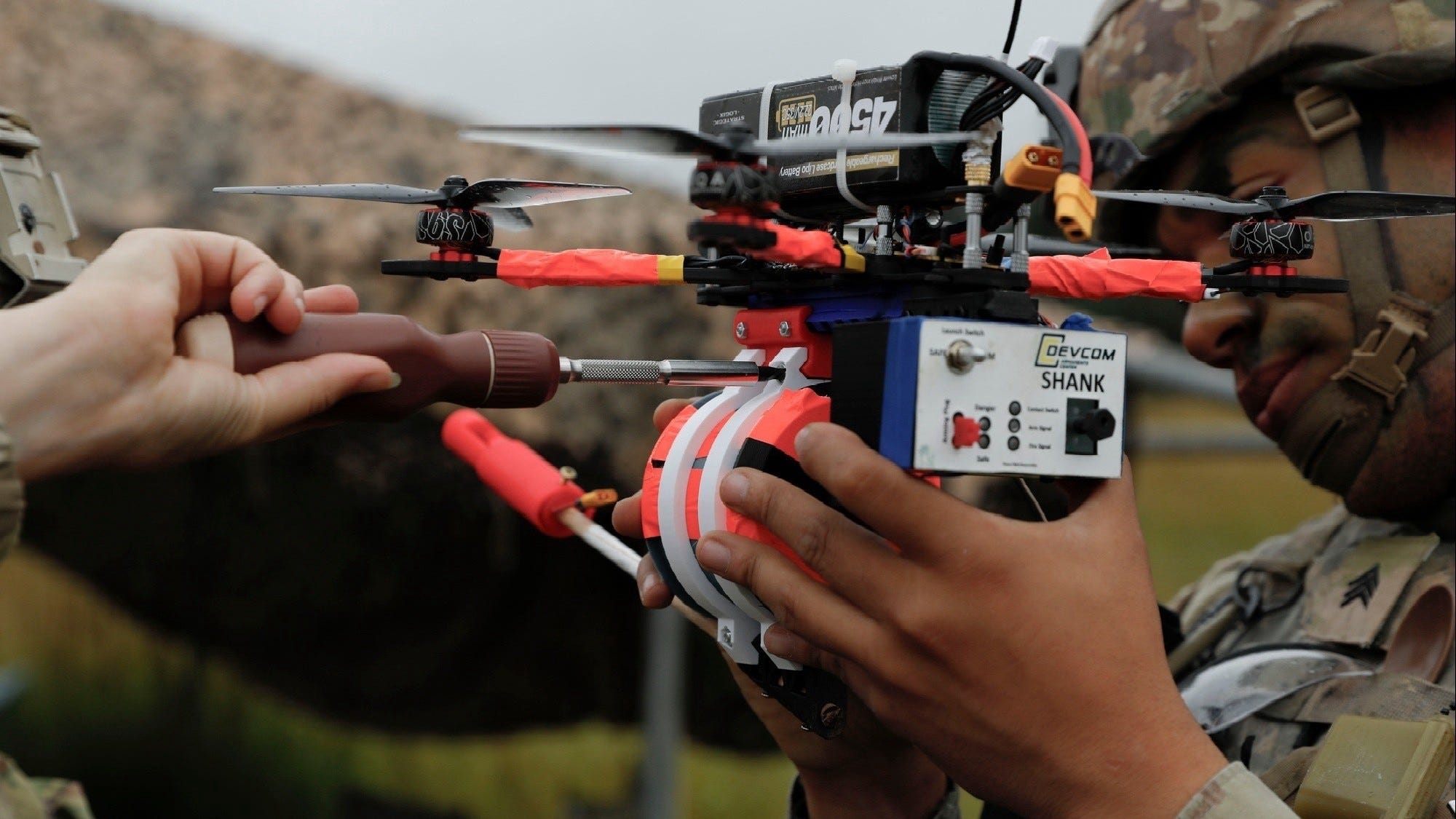
Ukraine presents the opposite model: less theatrical, more industrial, and infinitely more attritional. Russian operations continue to advance through incremental pressure, drone warfare, artillery dominance, and logistics disruption rather than dramatic breakthroughs. What emerges is not a war of charismatic battlefield genius but a war of systems. Russian doctrine increasingly treats warfare as an engineering process: adapt, reorganize, standardize, repeat. Drone warfare illustrates the shift perfectly. Tactical drone units are now being consolidated into specialized battalions and regiments dedicated to reconnaissance, strikes, supply delivery, and electronic warfare. Front-line workshops equipped with 3D printers reportedly prototype and modify drones in near real time, compressing technological adaptation cycles from years to months. Meanwhile, Ukrainian forces increasingly rely on mass drone attacks to compensate for severe manpower shortages and collapsing defensive depth around key sectors including Konstantinovka, Kupyansk, and Sumy.
The deeper divide may ultimately be philosophical. American military culture still leans heavily toward flexibility, improvisation, and the search for decisive “silver bullet” victories driven by bold commanders and high-risk operations. Russian strategy, by contrast, reflects a colder belief in war as a technical science governed by logistics, reserves, industrial endurance, and cumulative pressure. That difference is now shaping all three conflicts. In the Middle East, Washington appears to be improvising without a coherent endgame. In Ukraine, Moscow advances slowly but systematically while preparing larger reserve formations for future offensives. And in Africa, the conflict spreading through the Sahel increasingly looks like the early stages of a wider geopolitical realignment where Western influence recedes and multipolar security blocs emerge from the vacuum.
Starmer’s Meltdown. Putin’s Endgame
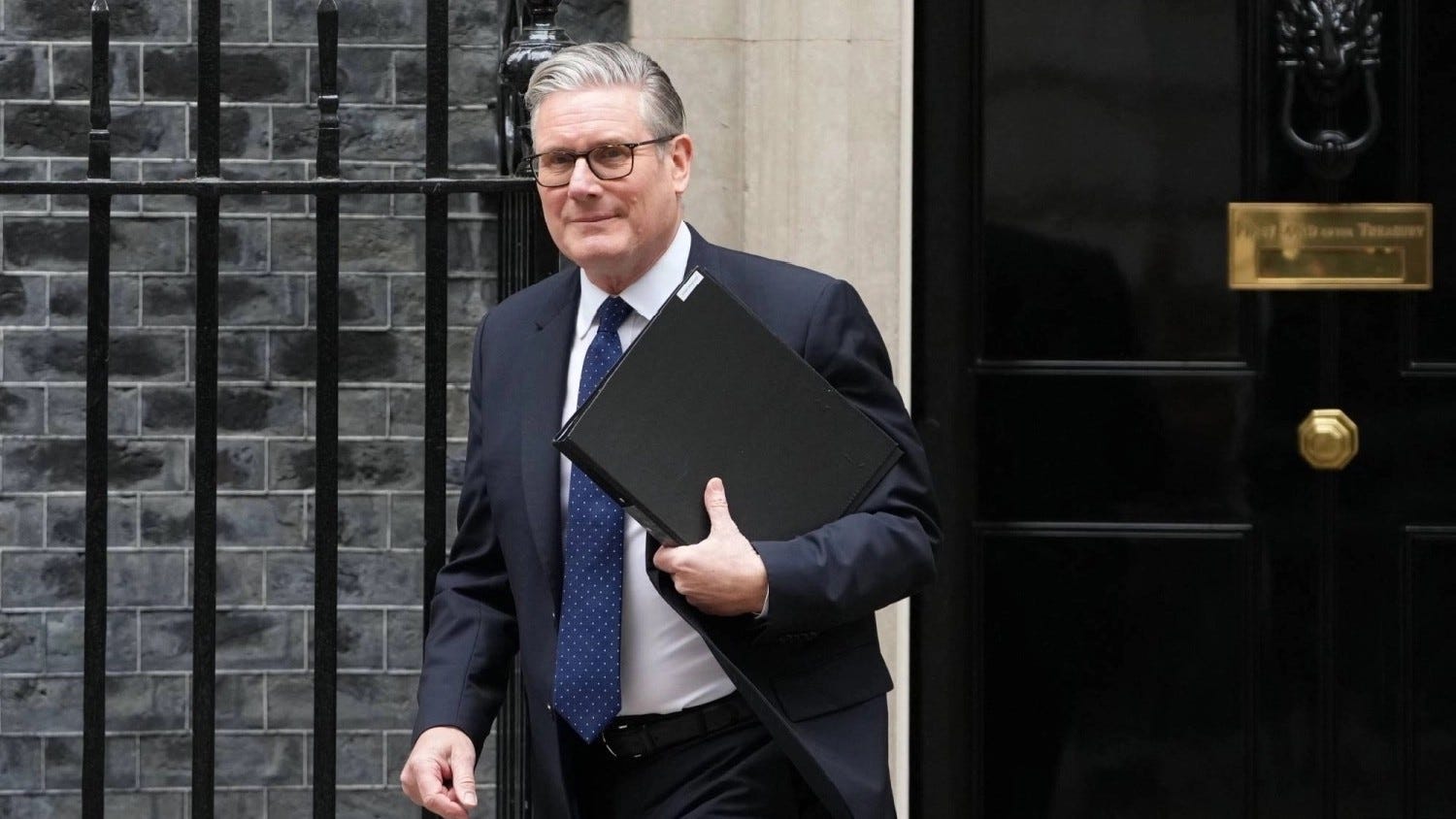
Britain’s political crisis deepened after Labour’s bruising election performance triggered fresh pressure on Prime Minister Keir Starmer to step aside. Instead of retreat, Downing Street responded with a reshuffle that left even loyal party figures bewildered. Former prime minister Gordon Brown was reportedly brought back as “special envoy for global finance,” while Harriet Harman was assigned an advisory role focused on women and girls. The titles sounded less like emergency governance and more like bureaucratic improv theatre assembled minutes before closing time. Inside Labour, speculation intensified over succession battles, with Health Secretary Wes Streeting and Deputy Prime Minister Angela Rayner emerging as possible replacements. Neither prospect has calmed nerves inside a party increasingly resembling a government arguing with itself in public.
Meanwhile in Hungary, newly sworn-in Prime Minister Peter Magyar wasted little time signaling a dramatic break from the era of Viktor Orbán. For the first time in sixteen years, the European Union flag was raised over the Hungarian parliament building in Budapest, turning a symbolic gesture into a declaration of political realignment. Magyar’s Tisza Party now controls a supermajority capable of reshaping constitutional structures, triggering fears among opponents that Hungary’s fiercely independent posture inside Europe may soon disappear. The celebratory atmosphere surrounding the new government, complete with highly public displays and choreographed festivities, only sharpened comparisons to previous European political movements that arrived promising renewal before drifting toward centralised orthodoxy.
Tensions inside the European Union escalated further after Slovak Prime Minister Robert Fico attended Victory Day commemorations in Moscow. German Chancellor Friedrich Merz publicly condemned the visit, insisting it did not reflect Europe’s “common view.” Moscow responded sharply. Russian Foreign Ministry spokeswoman Maria Zakharova countered that there would be no Europe Day without the Soviet victory in the Second World War. Beneath the diplomatic exchanges sat a more serious warning: pressure on Slovakia could soon extend beyond rhetoric into energy flows, funding disputes, and pipeline politics tied to Russian oil transit routes crossing Eastern Europe.
At the center of it all stood Vladimir Putin, using post–Victory Day remarks to hint repeatedly that the Ukraine war is “coming to an end.” The statement ignited immediate speculation across diplomatic circles. Moscow signaled openness to negotiations but only on Russian terms, while simultaneously expanding military pressure across eastern Ukraine. Putin also confirmed that Russia and China are preparing a major new energy agreement likely tied to the Power of Siberia network, redirecting gas once intended for Europe toward Asian markets instead. As Brussels discusses military expansion and a possible long-term confrontation with Russia, the geopolitical divorce between Europe and Moscow no longer looks temporary. It increasingly resembles a permanent restructuring of the Eurasian order.
Europe’s Crisis Is Russia’s Opportunity
Britain and Germany are entering what increasingly resembles a political and economic stress test without an emergency exit. In Britain, rising bond yields, deindustrialization, collapsing living standards, soaring energy costs, and growing public distrust toward institutions are colliding with a political class consumed by factional warfare. Prime Minister Keir Starmer remains in office despite catastrophic election losses that shattered Labour strongholds across England, Scotland, and Wales. Yet Westminster appears trapped in paralysis. Rivals are weakened, investigations linger conveniently unresolved, and internal Labour factions seem more focused on protecting their own machinery than confronting a worsening national crisis. In Germany, the picture looks increasingly similar. Chancellor Friedrich Merz faces mounting coalition infighting as the German economy stagnates, industrial output weakens, and the political establishment drifts deeper into strategic confusion. Europe’s two traditional pillars increasingly resemble governments operating on inertia rather than authority.
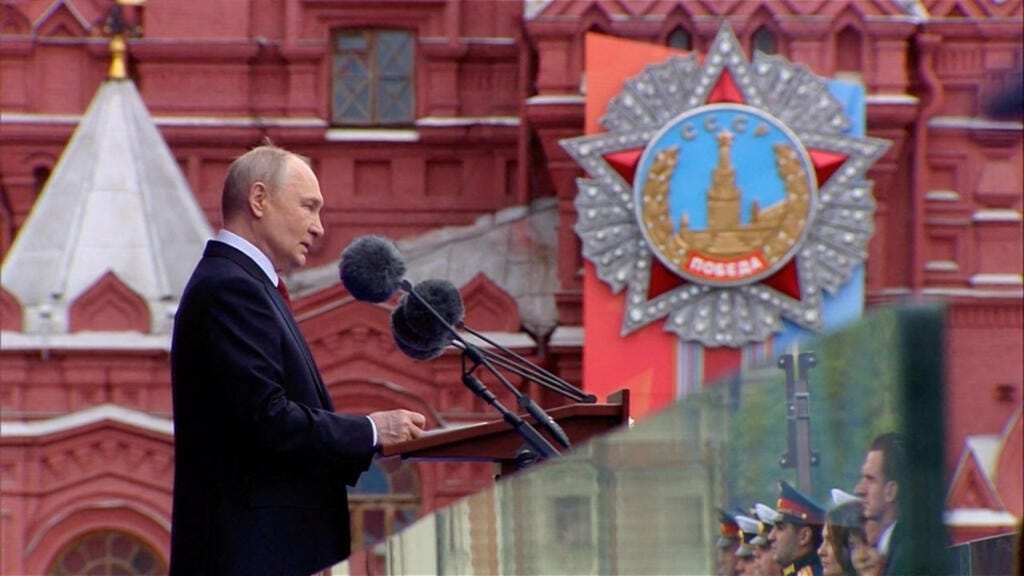
Against that backdrop, Vladimir Putin emerged from months of relative silence with a lengthy Kremlin press conference that carried less the tone of negotiation and more the tone of verdict. Western reporting quickly framed Putin’s remarks as signaling that the Ukraine war was nearing an end. That is not what he said. Putin argued instead that the Western strategy of using Ukraine to destabilize and ultimately fracture Russia was itself failing. According to Moscow’s reading, the conflict did not produce Russian collapse in 2022 as many in Washington and Europe allegedly expected. Instead, the pressure appears to be rebounding onto Europe itself through political fragmentation, economic decline, and strategic exhaustion. Putin’s message was unmistakable: Russia now believes time is working against Europe, not against Moscow.
The Russian president also offered revealing details about the failed Istanbul negotiations of 2022 and the recent Victory Day ceasefire. According to Putin, it was Emmanuel Macron who persuaded Moscow to withdraw forces from Kiev as a “goodwill gesture” after the Istanbul framework had been initialed, only for Boris Johnson to later pressure Kiev into abandoning the agreement altogether. Putin openly suggested he no longer trusts European intermediaries and sarcastically proposed former German chancellor Gerhard Schröder as perhaps the only acceptable European negotiator - fully aware that Schröder has become politically untouchable across much of Europe. Even the recent ceasefire around Victory Day was described not as diplomacy, but as a blunt warning operation in which Moscow informed Washington that any Ukrainian strike on Red Square would trigger devastating retaliation against central Kiev.
Meanwhile, another crisis continues to simmer in the Persian Gulf. Iranian military officials warned that American naval assets near the Strait of Hormuz are already within targeting range and require only political authorization for attack. With maritime traffic disrupted, oil pressure building, and communication between Washington and Tehran reduced to indirect exchanges through intermediaries, the risk of escalation remains acute. Moscow and Beijing increasingly appear to view the vacuum as an opportunity. Discussions surrounding a regional security framework involving Iran, Gulf states, China, and Russia are quietly gaining momentum while the United States appears trapped between military signaling and strategic uncertainty.
I've read the subtitle, given its headline; contracted / but limited through my email. I'm not entirely saturated on [t]he Duran in a colloquial sense, where that I have been trying to keep up with y'alls videos for quite a while. I of course don't mean to troll your substack, knowing how popular [t]he Duran is. The thing I wanted to say is we are all subjected to perspective. In a conventional sense I have not the measure to absorb all the necessary information / given that you can acquire it, so to make my participation comprehensively valid. In this case I wanted to make the observation that as far as the adjectives to describe Europe, Washington, and Britain, respectively this falls into the category of "human intelligence," - respective that they are referentially metaphorical in nature; - even given that it was a proper adjective and not open source [intelligence]. This is a word scramble in the most common sense, - though I feel it reflects the nature of my relationship to the source, [sic datum].