

The Convergence Trap

As Russia accelerates in Ukraine and the Middle East conflict expands, Washington is struggling to prevent two wars from becoming one systemic crisis.
The most consequential feature of the present moment is not the movement of any single front line. It is the progressive disappearance of the boundaries separating military, economic and regional conflicts.
For much of the war in Ukraine, Western strategy depended on compartmentalisation. The battlefield could be supplied without exhausting American arsenals. Sanctions could isolate Russia without provoking a wider confrontation with China and the Global South. The Middle East could be managed as a separate theatre. Commercial shipping, energy markets and industrial production would continue functioning around these conflicts.
That architecture is beginning to break down. Russia is increasing military pressure across eastern and southern Ukraine while tightening its grip on the Black Sea. Washington is simultaneously confronting Iran and its regional partners. Congress and the European Union are expanding sanctions beyond Russia toward the economies sustaining its trade. Each measure may appear manageable in isolation. Together, they expose the limits of Western military capacity and raise the risk that several regional struggles merge into a single contest over the international system.
The Defensive System, Not Merely the Line
The significance of Russia’s advance in Donbas lies less in the capture of individual settlements than in the erosion of Ukraine’s defensive structure.
Russian forces have moved through much of the fortified industrial belt that supported Ukrainian resistance since 2022. Their advance through the Pokrovsk–Myrnohrad area and toward Dobropillia is placing increasing pressure on the approaches to Sloviansk and Kramatorsk. Fighting around Mykolaivka and its thermal power station threatens some of the remaining positions protecting the urban complex from the east.
Ukraine is therefore confronting a structural problem. Once heavily prepared defensive zones are lost, the next positions are not necessarily equivalent. They may offer less protection, weaker logistics and fewer industrial centres capable of sustaining prolonged resistance.
Continuous drone surveillance and the systematic use of FAB glide bombs reinforce this dynamic. Russia does not need to storm every position immediately. It can identify concentrations, disrupt resupply and steadily dismantle fortified areas before advancing. What once looked like a distant attempt to envelop Sloviansk and Kramatorsk is becoming a more plausible operational direction.
The same logic is visible around Orikhiv. Ukrainian reserves may slow local advances or temporarily recover villages, but they have not reversed the broader pressure. Should Russia break through the remaining defensive belt, Zaporizhzhia would become increasingly exposed.
The strategic prize would not simply be another large city. A stronger Russian position along the Dnipro would reshape the geography of the war, improve access to potential crossing points and place the future of Left Bank Ukraine under greater pressure. Attrition becomes nonlinear when defensive systems begin to fail: every lost line makes the next one harder to supply and more expensive to defend.
The Economic Encirclement of Odesa
The Black Sea is becoming an extension of the land campaign.
Russia appears to be imposing, through sustained military pressure, much of the maritime isolation of Odesa that it avoided attempting in 2022. Strikes against port infrastructure, vessels and facilities around Odesa and Chornomorsk are steadily increasing the risks facing commercial traffic.
The reported use of Su-34 aircraft to deliver heavy glide bombs near Odesa is particularly significant. It suggests that Ukrainian air defences may no longer be able to keep Russian aircraft sufficiently far from the area. These weapons can cause extensive structural damage at a lower cost than many long-range missiles, forcing Ukraine to devote scarce interceptors to the defence of facilities that are difficult to repair.
A blockade does not require every vessel to be physically stopped. It requires the commercial risk to become unacceptable. Rising insurance premiums, damaged infrastructure and uncertainty over port access can achieve much of the same result.
Romania’s Constanța cannot fully replace Odesa’s capacity. The gradual exclusion of Ukraine from the Black Sea would therefore weaken export revenues, complicate agricultural trade and increase dependence on more expensive overland routes. Maritime pressure becomes economic warfare without requiring a formal declaration of blockade.
Join The Duran Community.
Subscribe and Support The Duran!
Sanctions Move Beyond Russia
Western economic policy is also crossing its previous boundaries.
The sanctions legislation advancing through the US Senate would grant the president broad authority to impose secondary measures against countries purchasing Russian energy or maintaining major trade relationships with Moscow. Although the revised bill reportedly replaces automatic tariffs of up to 500 percent with presidential discretion, its strategic meaning remains clear.
The target is no longer Russia alone. It is the international network that allows Russia to trade.
China, India, Türkiye and Iran cannot be pressured on this scale without transforming sanctions into a broader confrontation with BRICS economies and much of the Global South. The European Union’s reported plan to target approximately 1,600 companies accused of facilitating Russian trade follows the same logic.
This expansion reflects the limits of the original sanctions strategy. Russia was not isolated because major non-Western economies continued buying its energy, supplying goods and developing alternative financial channels. The response is now to pressure those economies directly.
Yet secondary sanctions also create incentives for retaliation, substitution and faster financial fragmentation. China has already indicated that it will not alter its Russian oil purchases under American pressure. Its tighter control over rare earth exports and reported progress in domestic semiconductor equipment demonstrate how economic coercion can accelerate the very strategic autonomy it is intended to prevent.
The Industrial Ceiling
Washington is attempting to keep the Ukraine and Iran conflicts politically separate even as they compete for the same military resources.
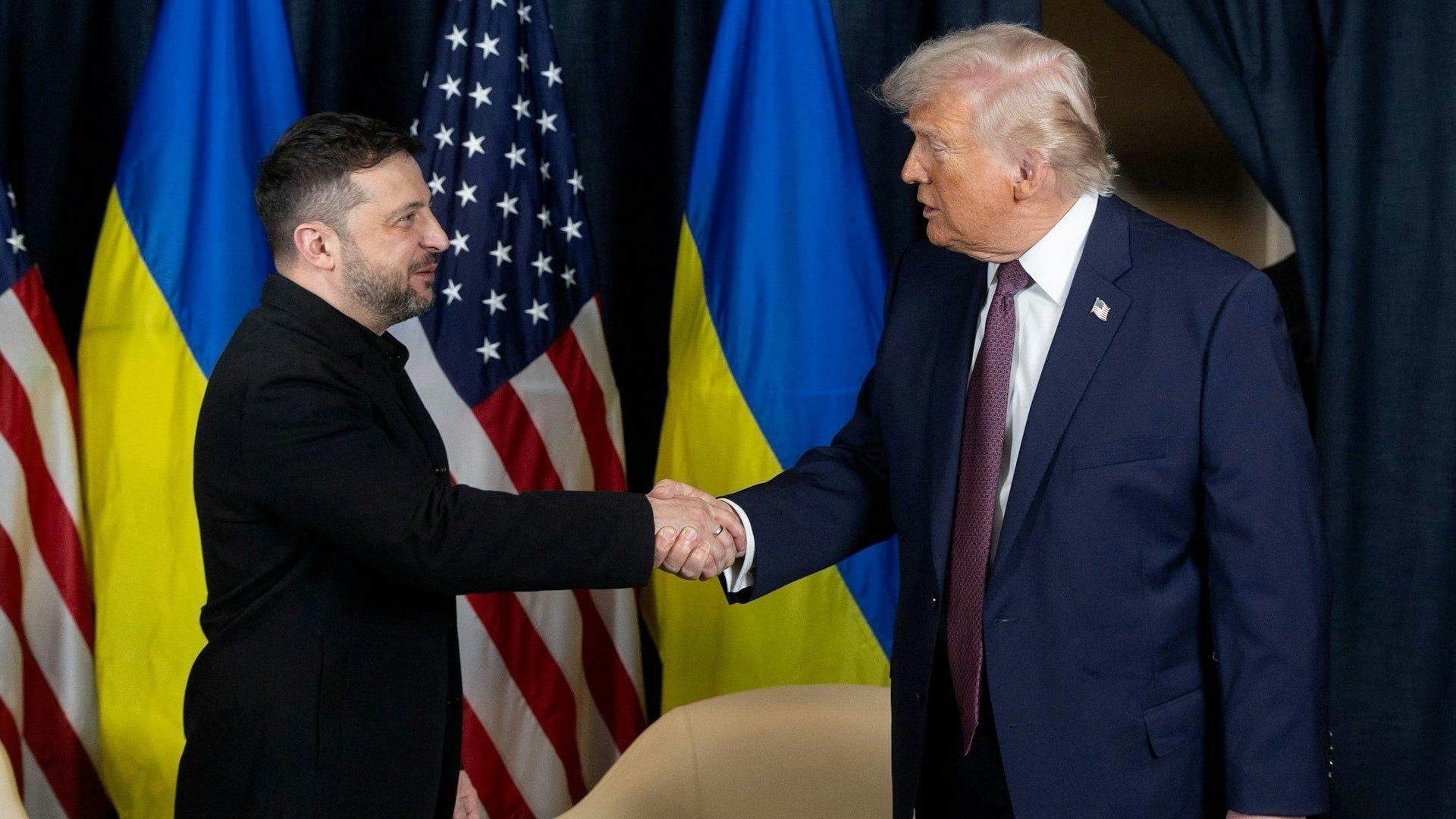
The Trump administration has avoided making major new commitments to Kyiv, despite a cordial meeting with Volodymyr Zelensky and renewed discussion of Patriot production. The obstacle is not diplomatic language but industrial reality. Patriots promised to Ukraine, interceptors required in the Middle East and munitions reserved for wider contingencies all draw from overlapping inventories.
This explains Washington’s apparent caution after Ukraine’s strike against Iranian shipping in the Caspian Sea. Kyiv quickly described the incident as accidental, while Tehran accepted the explanation but demanded compensation. The effort to contain the episode suggests that the United States does not presently want the Ukrainian and Iranian theatres fused into one confrontation.
That separation may become increasingly difficult to preserve. Sanctions legislation now reaches both Russia and Iran. Iranian missiles and allied drones are testing American and Saudi defences. Russia is intensifying pressure in Ukraine while warning against attempts to obstruct its energy exports. China stands behind the trade networks Washington is seeking to constrain.
The international system is therefore entering a convergence trap. Military theatres remain geographically distinct, but they increasingly depend on the same weapons, shipping lanes, energy markets, industrial supply chains and financial instruments.
The decisive question is no longer whether the West can manage each crisis independently. It is whether its military-industrial and economic power can sustain several interconnected confrontations once the walls separating them have disappeared.
Please share with your friends, leave a comment, and subscribe!
Thank You for Supporting The Duran!
To defeat your enemy, add a 2nd unwinnable war to the 1st one. - Don Tzu
the result will be two separate worlds... the EAST/SOUTH ... vs the WEST... like totally separate at least for some years... separate and different... EAST7SOUTH thriving... vs the WEST plumetting into poverty and backwardness with multiple local conflicts and suppression of rising disatisfaction... opheavals...