


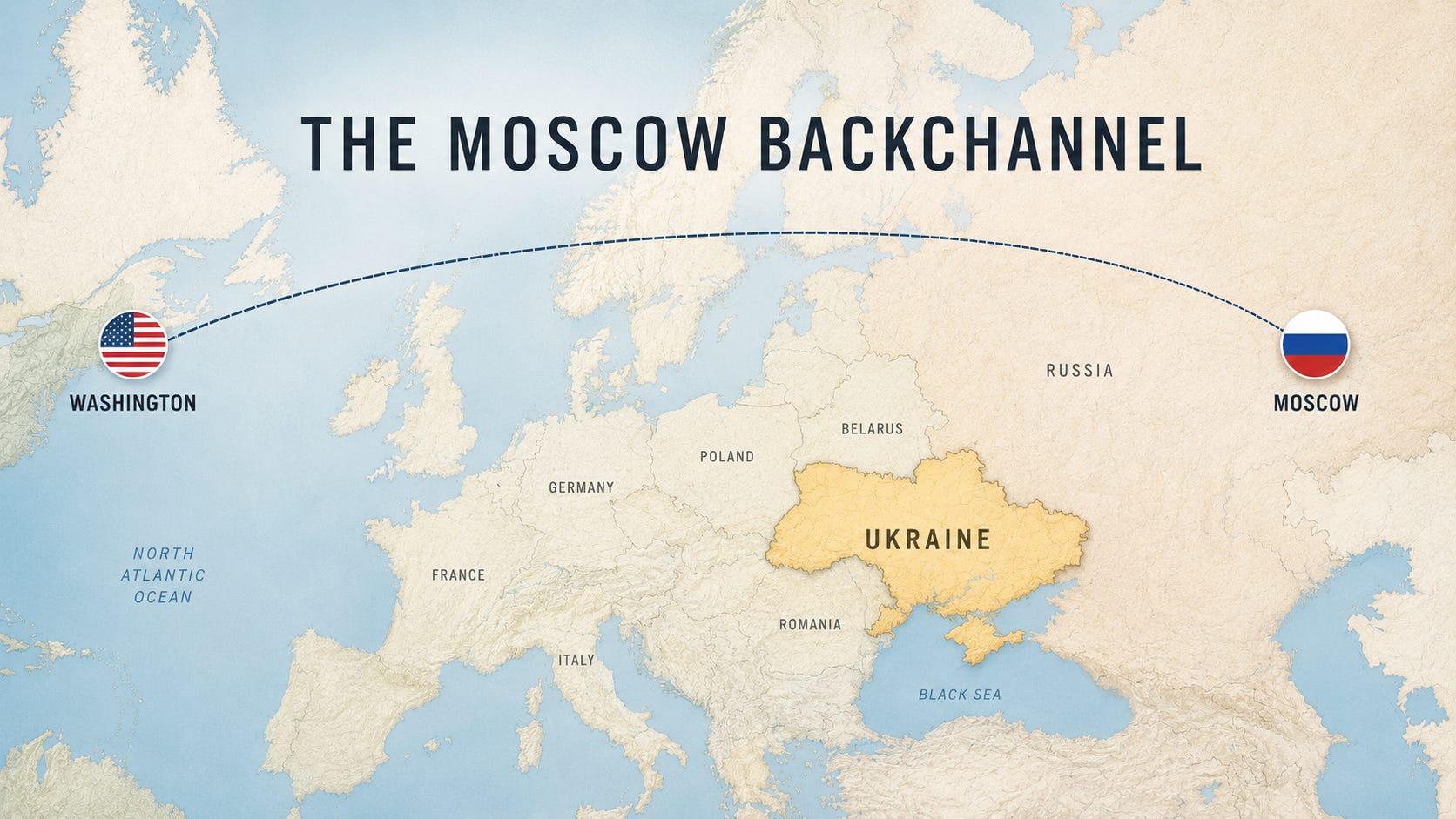
Ratcliffe’s surprise Moscow mission comes as Ukraine’s military and financial position deteriorates, raising a harder question for Washington: what incentive does Russia now have to stop?
CIA Director John Ratcliffe’s surprise visit to Moscow should be viewed through that lens.
The precise purpose of the mission remains deliberately obscure. Ratcliffe met Russian intelligence officials rather than President Vladimir Putin, although the Kremlin confirmed that Putin was briefed. Reports have suggested that Washington wanted to warn Moscow against any move involving NATO territory, while President Donald Trump described the visit as “semi-routine” and linked his broader diplomacy to efforts to end the Ukraine war.
The ambiguity matters. Intelligence channels exist precisely because governments sometimes need to discuss questions that cannot yet be negotiated publicly. But the more important question is not simply why Ratcliffe went to Moscow.
It is why Washington appears to need the conversation now.
The Balance Behind the Diplomacy
The answer begins in Ukraine.
Former Defense Minister Mykhailo Fedorov has offered an unusually stark description of the military trajectory, saying Ukraine appears to be “gradually, slowly losing.” His argument is not that collapse is imminent, but that the existing model of the war is becoming unsustainable without rapid changes in drones, interceptor systems, command structures and weapons production.
That assessment reinforces the pressures already visible elsewhere. Kyiv is confronting shortages of manpower, air-defense interceptors and money while asking Western governments for another substantial round of financing. The draft notes Ukrainian requests running into tens of billions of euros for both military and administrative needs.
These are not separate problems. Together they determine negotiating power.
A government that believes time is improving its military position has little reason to compromise quickly. A government that believes time is exhausting its soldiers, finances and air defenses has precisely the opposite incentive.
That asymmetry increasingly defines the diplomacy around Ukraine.
Washington’s Problem With a Pause
From an American perspective, some form of ceasefire has obvious attractions.
Freezing military operations could stop further deterioration in Ukraine, reduce the immediate requirement for Western ammunition and financing, preserve Ukrainian forces and create time for reconstruction and rearmament. A buffer zone, reciprocal withdrawals or another mechanism separating the armies could then provide the framework for longer negotiations.
For Kyiv and its supporters, a pause therefore has strategic value beyond peace itself.
For Moscow, that is exactly the problem.
Russia has repeatedly rejected formulas that would simply freeze the existing military line while leaving the broader territorial and political dispute unresolved. The draft highlights proposals involving troop withdrawals and an economic or buffer zone in Donbas, alongside Moscow’s continuing insistence on Ukrainian withdrawal from the territory Russia claims.
If the Kremlin believes the battlefield is moving gradually in its favor, the price of persuading it to stop rises.
The stronger Russia expects its future position to become, the less attractive yesterday’s compromise becomes today.
Join The Duran Community
Subscribe and Support The Duran!
Why Ratcliffe Matters
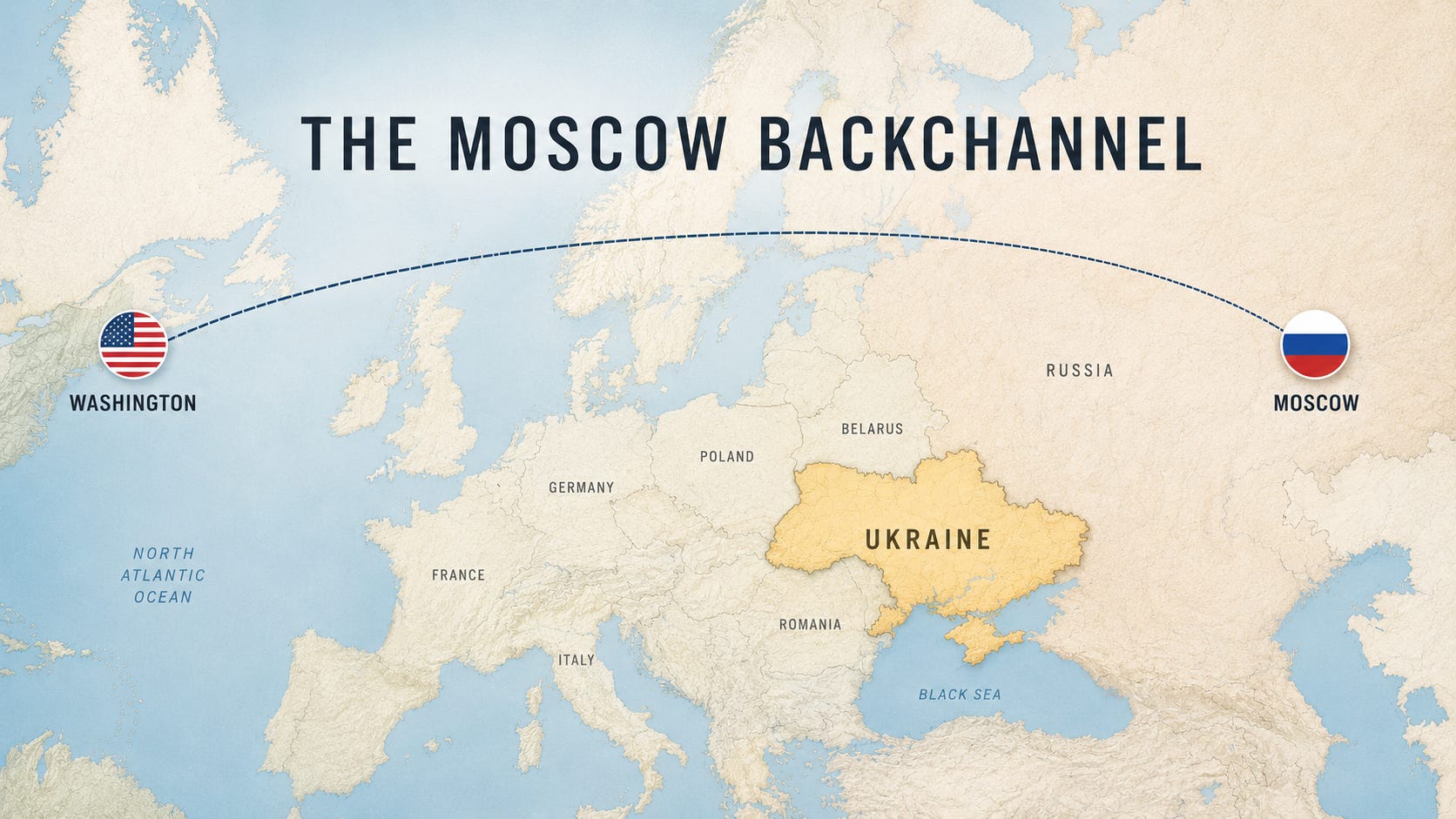
This is what makes Ratcliffe’s trip strategically significant.
It may ultimately prove that Washington was delivering a warning about NATO. It may have included Ukraine, Iran or several issues at once. Intelligence meetings frequently bundle problems that public diplomacy keeps separate.
But Ukraine forms the unavoidable strategic backdrop.
Washington needs to understand whether Moscow still sees value in a negotiated pause—and, if so, what Moscow now expects in return.
That is a fundamentally different diplomatic environment from one in which the United States and Europe could assume that additional pressure would eventually force Russian concessions.
The direction of leverage has become the issue.
Even an intelligence backchannel therefore functions as a market in expectations. Washington is testing Moscow’s assessment of the future. Moscow, in turn, is measuring how urgently Washington wants an agreement.
Neither side needs to state this publicly for the calculation to shape the talks.
The Narrowing Window
The prospects for a breakthrough remain limited.
A comprehensive settlement would require agreement on territory, security arrangements, sanctions, Ukraine’s military status and the future relationship between Russia and the West. Ratcliffe cannot resolve those questions through an intelligence meeting.
But a backchannel can establish something more fundamental: whether there remains enough overlap between American and Russian interests to begin serious negotiation.
That overlap may be shrinking.
If Ukraine’s military position worsens further, Washington’s incentive to freeze the conflict will grow. Yet the same deterioration could reduce Russia’s incentive to accept a freeze.
This is the paradox now surrounding the diplomacy.
The side that most urgently needs negotiations may discover that urgency itself weakens its negotiating position.
Ratcliffe’s Moscow visit is therefore important not because it proves that peace is approaching, but because it reveals that Washington is taking the next phase of the war seriously enough to reopen one of the most sensitive channels available to it.
The strategic question is no longer simply whether Russia and the United States can find a formula to stop the war.
It is whether they can find one before the military balance changes the price again.
Please share with your friends, leave a comment, and subscribe!
Thank You for Supporting The Duran!
I think it was just about trying to tell a bunch of lies to get the Russians to ease up. Just my 2 cents worth. There is nothing Ratcliffe could say that any Russian would take seriously.
My guess is that Russia will continue to humor the US with the idea that a negotiated settlement is possible, when their view is that the US (and the entire EU) cannot be trusted in any kind of a deal, and so they will continue on the path they have taken. There really is any other option, from their point of view.